

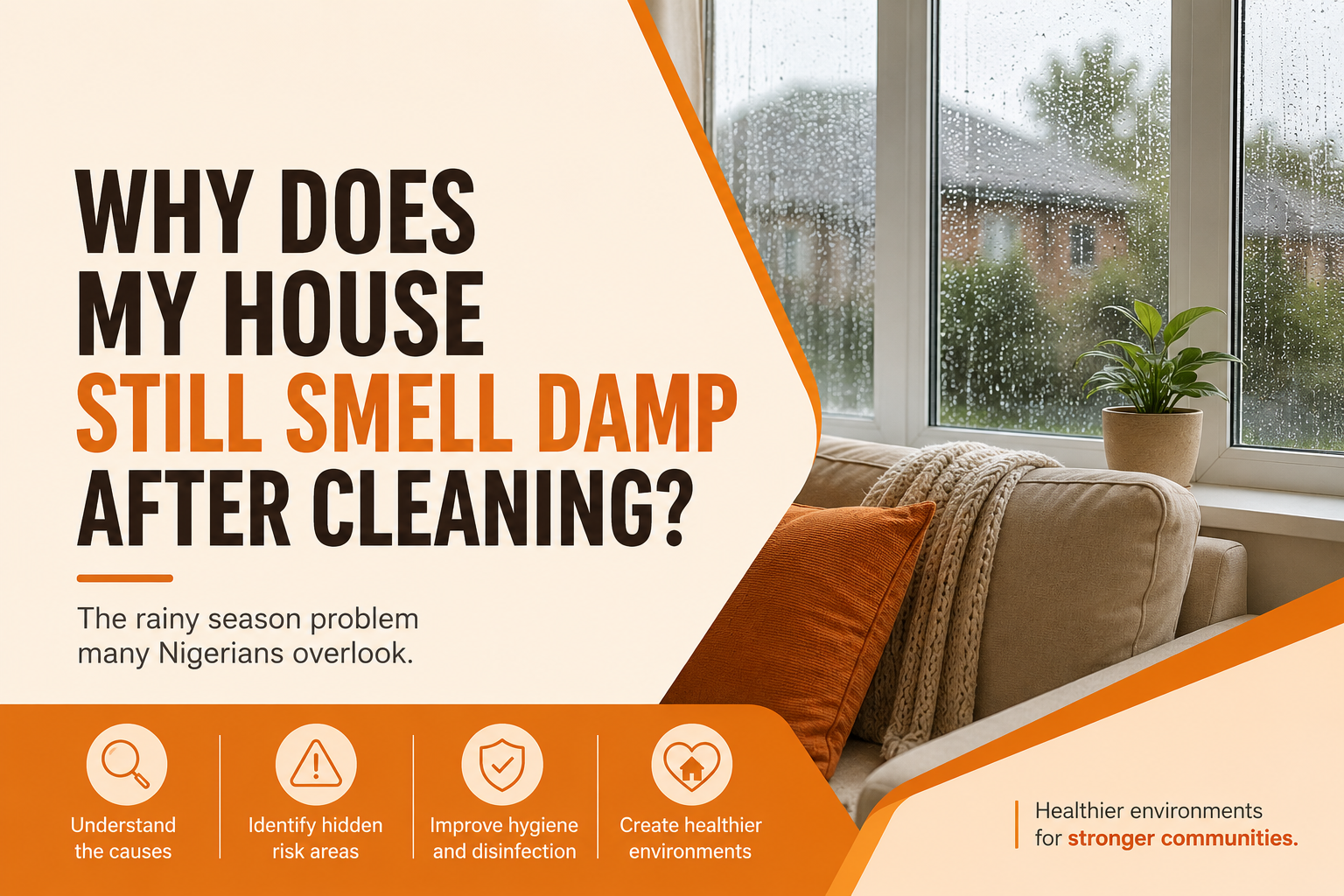
The rainy season is here, and for many Nigerians, one common complaint keeps coming up:
“My house still smells damp, even after cleaning.”
You mop the floors, clean the bathroom, empty the bins, and wipe down surfaces, yet a musty smell lingers in the air.
If this sounds familiar, you’re not alone.
The truth is that during the rainy season, cleaning alone may not be enough to maintain a healthy indoor environment.
Why Does This Happen?
During periods of prolonged rainfall, humidity levels increase significantly.
Moisture can become trapped in walls, corners, furniture, bathrooms, kitchens, and other poorly ventilated areas. Over time, these damp conditions create an environment where microorganisms can thrive.
This often leads to:
- Persistent musty odours
- Damp-smelling rooms
- Reduced indoor comfort
- Poor environmental hygiene
- Increased contamination risks on frequently touched surfaces
Many people focus on removing visible dirt but overlook the impact of moisture on their environment.
Cleaning and Disinfection Are Not the Same Thing
One of the most common misconceptions is that cleaning and disinfection are the same.
Cleaning helps remove visible dirt, dust, and debris.
Disinfection supports hygiene management by reducing contamination on frequently touched surfaces.
During the rainy season, both play important roles in maintaining healthier environments.
You may also find our article on everyday habits that may be making your home less hygienic helpful in identifying additional hygiene risks around the home.
Areas That Often Get Overlooked
When damp odours persist, the source is often found in areas that are cleaned less frequently, including:
- Bathroom floors and drains
- Kitchen sinks and worktops
- Behind furniture
- Window ledges
- Entryways exposed to rainwater
- Frequently touched surfaces such as door handles and switches
Giving these areas additional attention can help improve environmental hygiene and reduce unpleasant odours.
A Better Approach During the Rainy Season
Creating a healthier environment requires a combination of:
Regular Cleaning
Remove visible dirt and debris from surfaces.
Proper Environmental Disinfection
Use appropriate hygiene solutions on frequently touched surfaces and shared areas.
Good Ventilation
Allow fresh air to circulate whenever possible.
Consistent Hygiene Practices
Environmental hygiene is most effective when it becomes part of a routine rather than an occasional activity.
Supporting Healthier Environments
At Morison Industries, we understand the unique hygiene challenges that come with the rainy season.
Products such as Morigad Germicide, Morigad Lysol, and Zylol Antiseptic Disinfectant are designed to support environmental hygiene practices across homes, workplaces, schools, healthcare facilities, and farms.
When used according to label instructions, they can help support a more comprehensive hygiene routine as part of your environmental management efforts.
Final Thoughts
If your house still smells damp after cleaning, the problem may not be dirt alone.
Moisture, poor ventilation, and inconsistent hygiene practices can all contribute to unpleasant indoor conditions during the rainy season.
By combining regular cleaning, proper environmental disinfection, and consistent hygiene routines, you can help create a cleaner, fresher, and healthier environment for everyone who uses the space.
Because healthier environments don’t happen by chance. They are built through everyday actions and the right hygiene practices.