

A clean-looking home does not always mean every frequently touched area receives the same level of attention. In our daily routines, some habits can unintentionally contribute to untidy or less hygienic living spaces.
Here are five common habits worth paying attention to:
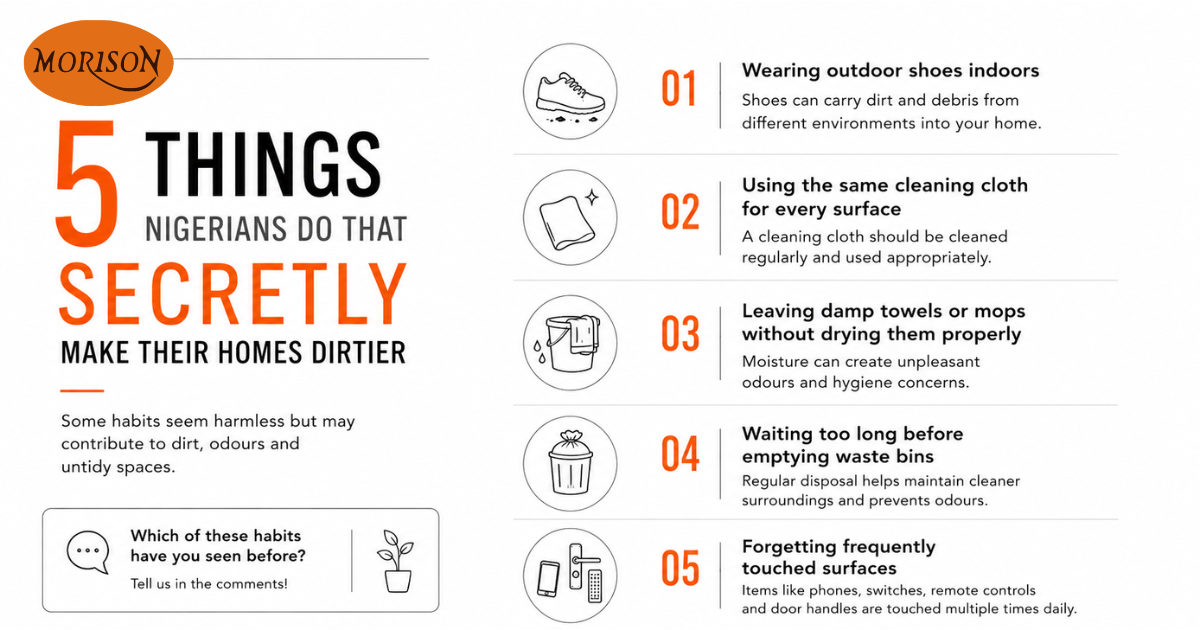
1. Frequently Touching Surfaces Without Regular Cleaning
Door handles, light switches, remote controls, and mobile phones are among the most frequently touched items in many homes. Because they are used regularly, they can easily accumulate dirt and residue over time.
Tip: Consider including these commonly touched surfaces in your regular cleaning routine.
2. Wearing Outdoor Footwear Indoors
Shoes used outdoors may come into contact with dust, mud, and other environmental contaminants. Bringing them into living areas can transfer dirt to floors and carpets.
Tip: Designate a shoe area near the entrance and consider changing into indoor footwear.
3. Allowing Damp Areas to Remain Unattended
Bathrooms, kitchens, and laundry areas often experience moisture build-up. When damp surfaces are left unattended, they can become difficult to maintain over time.
Tip: Dry surfaces when practical and ensure rooms receive adequate ventilation.
4. Overlooking Frequently Used Cleaning Tools
Items such as mops, sponges, cloths, and brushes play an important role in household cleaning. However, these tools also require regular maintenance and replacement when necessary.
Tip: Clean and store cleaning tools properly according to their intended use.
5. Delaying Waste Disposal
Household waste can accumulate quickly, especially in busy homes. Delaying disposal may contribute to unpleasant odours and untidy surroundings.
Tip: Empty waste bins regularly and keep them clean as part of routine housekeeping.
Small Habits, Big Difference
Maintaining a pleasant home environment often comes down to consistent everyday practices. Paying attention to commonly overlooked areas and routines can help support a cleaner, more comfortable living space for everyone.
This article is intended for general educational and housekeeping awareness purposes only and should not be considered medical or public health advice.